Sony ZV-E10 II Review: A Capable Vlogging Camera That Now Costs More
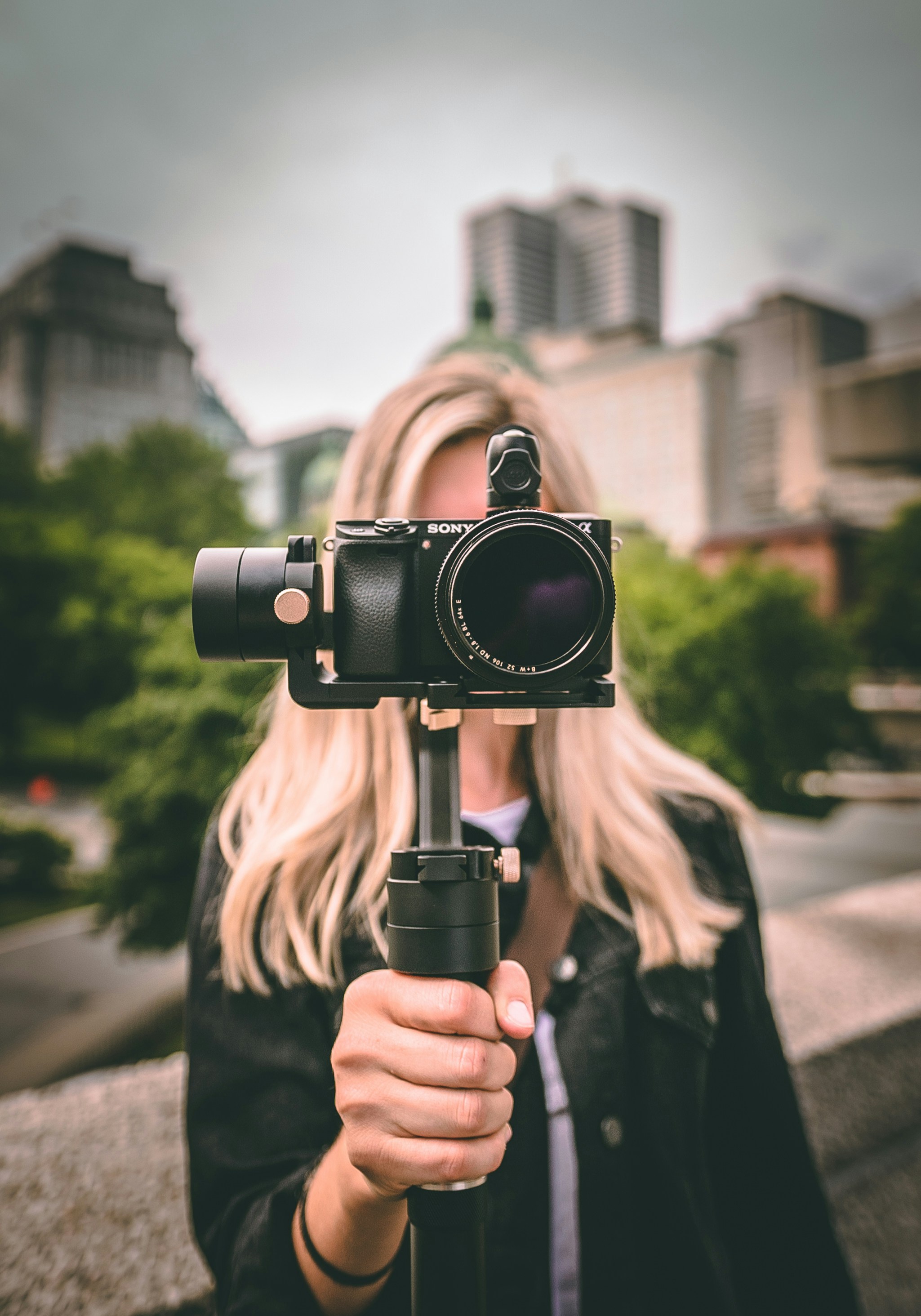
Key takeaways
The ZV-E10 II pairs a 26-megapixel APS-C sensor and Sony's BIONZ XR processor with 4K at up to 60p in 10-bit 4:2:2, S-Log3 and imported LUTs.
The NP-FZ100 battery is rated for about 610 shots or 130 minutes of continuous recording, a big step up from the original ZV-E10.
It has no viewfinder, no in-body stabilization and only an electronic shutter, so fast pans and moving subjects can skew.
Videomaker saw it overheat every 20 to 25 minutes at 4K60 and 200 Mbps, with no overheating at 50 Mbps.
B&H lists it at $1,198 body only and $1,298 with the 16-50mm power zoom as of November 8, 2026, up from $999 and $1,099 at launch.
What the ZV-E10 II is
Sony announced the ZV-E10 II on July 10, 2024, at $999 for the body and $1,099 with the updated E PZ 16-50mm f/3.5-5.6 OSS II kit lens. It replaced the original ZV-E10 as Sony's interchangeable-lens vlogging camera, with a newer 26-megapixel Exmor R sensor, the BIONZ XR processor from Sony's full-frame bodies and a larger battery.
It's still current in late 2026. Firmware version 1.02 arrived on November 11, 2025, and in December 2025 Sony added a free license that unlocks 4K at 120p with a heavy crop.
What works
Video quality is the main reason to buy it. The camera records 4K at up to 60p in 10-bit 4:2:2, oversampled from 5.6K at 30p and with a slight 1.1x crop at 60p. XAVC S-I All-Intra recording runs up to 600 Mbps for editing-friendly files. S-Log3 and user LUT import give you real grading room, and Videomaker credited it with about 13 stops of dynamic range, a lot for the money.
Autofocus holds up well. It has 759 phase-detection points for stills and 495 for video, with subject recognition for people and animals, and reviewers consistently named it a strength. Product Showcase mode shifts focus from your face to an object you hold up, and Background Defocus opens the aperture with one button.
The battery is the upgrade you'll notice most. The NP-FZ100 is the same pack Sony uses in its full-frame cameras, rated at about 610 shots or 130 minutes of continuous video, and you can charge or power the camera over USB-C. Videomaker recorded 4K24 at 50 Mbps for more than two hours on one charge.
It's built for solo shooting. The 3-inch touchscreen flips out to face you and the menus work in vertical orientation. There's a built-in directional mic, plus 3.5 mm mic and headphone jacks. Over USB-C it works as a webcam with no extra software, streaming at up to 4K30. The body weighs about 292 g, or 377 g with battery and card.
What doesn't
There is no in-body stabilization. Standard mode relies on the lens's optical stabilization, and the electronic Active mode smooths walking shots but crops the frame noticeably, which hurts on the kit lens's 16mm wide end. Vloggers who walk and talk a lot will want a wider lens or a gimbal.
There's also no mechanical shutter. The electronic shutter is quicker to read out than the original ZV-E10's, but Videomaker still saw rolling-shutter skew at every resolution and frame rate, and it shows in fast pans and in photos of moving subjects.
Heat is the other weak spot. In Videomaker's testing the camera stopped every 20 to 25 minutes at 4K60 and 200 Mbps, while at 50 Mbps it recorded without overheating. Other reviewers saw stops after around 12 to 20 minutes in demanding 4K modes, so plan for lower bitrates on long takes.
It has no viewfinder, so in bright sun you're working off the rear screen. It takes only one card in its single UHS-II SD slot, and it isn't built for still photographers who want physical controls.
Price and lenses
B&H lists the ZV-E10 II at $1,198 body only and $1,298 with the E PZ 16-50mm f/3.5-5.6 OSS II as of November 8, 2026. That's $199 above launch for both.
The power zoom kit lens is compact and stabilized but slow at f/3.5-5.6. For vlogging at arm's length, an ultrawide such as Sony's E 10-20mm f/4 PZ G or E 11mm f/1.8 gives a wider frame, and B&H sells kits with both. Because the camera uses Sony's E-mount, it also takes the full range of Sony and third-party APS-C and full-frame lenses.
How it compares
Camera | Body price (B&H, Nov 8, 2026) | Key difference from the ZV-E10 II |
|---|---|---|
Canon EOS R50 V | $569 | Cheaper, with a vertical tripod socket and a power zoom kit, but a smaller battery |
Fujifilm X-M5 | $899 | 6.2K open gate, a mechanical shutter and film simulations, but less consistent video tracking |
Nikon Z50 II | $956.95 | A viewfinder and built-in flash for photographers, plus 4K60 |
Sony ZV-E10 II | $1,198 | The biggest battery here, plus S-Log3 and Sony's lens range |
Who should buy it
The ZV-E10 II is a strong pick for YouTubers, streamers and solo creators who mostly film themselves, want 10-bit footage they can grade and like having Sony's lens range. It isn't the best value anymore. At $1,198 for the body it costs more than double the Canon EOS R50 V, so buyers on a budget, or anyone who mainly shoots photos and wants a viewfinder, should look at the Canon or the Nikon Z50 II first.
Frequently asked questions
How much does the Sony ZV-E10 II cost?
The ZV-E10 II costs $1,198 body only and $1,298 with the 16-50mm power zoom lens at B&H as of November 8, 2026. It launched at $999 and $1,099 in July 2024.
Does the Sony ZV-E10 II have image stabilization?
Not in the body. It uses the lens's optical stabilization in Standard mode and has an electronic Active mode for video, which crops the frame.
Does the ZV-E10 II overheat?
It can at its highest settings. Videomaker saw it stop every 20 to 25 minutes at 4K60 and 200 Mbps, while recording at 50 Mbps ran without overheating.
Can the Sony ZV-E10 II record S-Log3?
Yes. It records S-Log3 in 10-bit 4:2:2 and can import user LUTs to preview or record a look in camera.
Does the ZV-E10 II have a viewfinder?
No. There's no viewfinder and no way to add one, so you frame shots on the 3-inch flip-out touchscreen.
Can I use the ZV-E10 II as a webcam?
Yes. Plug it in over USB-C and it works as a standard webcam and microphone at up to 4K30, with no extra software.
What's the difference between the ZV-E10 and the ZV-E10 II?
The ZV-E10 II has a newer 26-megapixel sensor, the BIONZ XR processor, 4K60 in 10-bit 4:2:2, S-Log3 and the much larger NP-FZ100 battery. The original ZV-E10 records 4K30 in 8-bit and uses the smaller NP-FW50.